 Gertjan Filarski
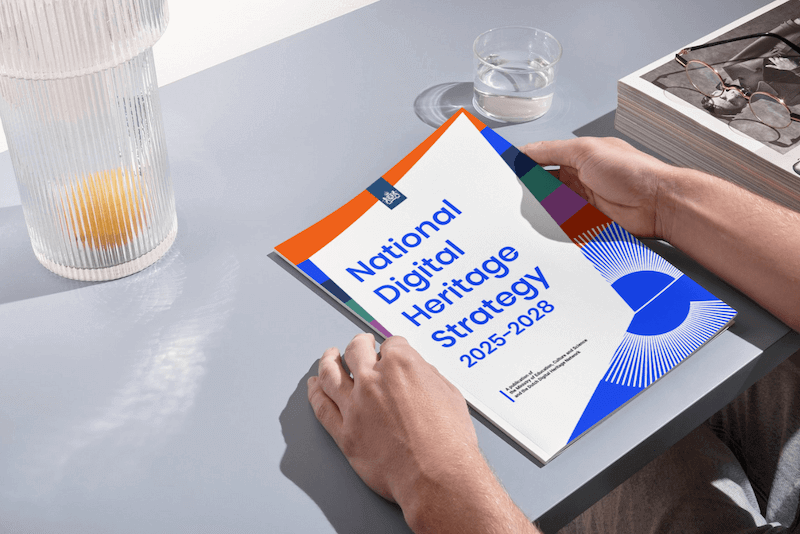
Anyone working today in a museum, archive, or library feels it every day: heritage lives not only in depots and display cases, but also in data. From scans to knowledge graphs — digital accessibility has become a core responsibility of the Dutch heritage sector. Behind this digital transformation lies a well-thought-out structure of policy, collaboration, and technology: the NSDE, the NDE, and the DERA.
The NSDE: Staying on Course in a Digital World
Since 2015, the Ministry of Education, Culture and Science (OCW) has pursued a national policy to make cultural heritage digitally accessible.
That policy is laid down in the National Strategy for Digital Heritage (NSDE) — a kind of compass that is recalibrated every three years.
It ensures that the Netherlands as a whole stays on course while technology and expectations evolve rapidly.
The NDE: The Network That Makes It Possible
Implementation of that strategy lies with the Dutch Digital Heritage Network (NDE).
That network is not a single organisation but a living ecosystem of people and institutions: museums, archives, libraries, support organisations, software developers, educators, and heritage communities — spread across the entire Kingdom.
Together they give the NSDE practical form. Within the NDE, knowledge is shared, standards are developed, and collaborations emerge that make heritage sustainably visible and usable for everyone.
The DERA: The Blueprint of Digital Heritage
To make all these initiatives work together, there is the Digital Heritage Reference Architecture (DERA).
You can think of it as the blueprint of the digital heritage landscape.
The DERA describes how systems, standards, and people are connected — based on the Dutch Government Reference Architecture (NORA), but tailored to the specific needs of heritage data.
DERA provides direction for technical choices and clarifies how institutions can connect to the broader network.
This creates a coherent digital heritage system in which data is not only preserved but also meaningfully shared.
The Netherlands as a Guiding Country
Internationally, there is great interest in this Dutch model.
Within Europe, the Netherlands is seen as a guiding country for digital heritage infrastructures — not because we have the largest datasets, but because we prioritise open standards and collaboration.
The choices made within the NDE and DERA are always based on principles of transparency, reusability, and openness — values that are increasingly important worldwide.
A Living Network, Not a Blueprint
The strength of Dutch digital heritage policy lies in the network itself.
NDE, NSDE, and DERA are not documents sitting in a drawer, but living agreements between people who give heritage a digital future.
In the coming years, this network will continue to grow — both within the Netherlands and across Europe.
Because while our heritage may be national, the way we make it digitally accessible is, by its very nature, a matter of international cooperation.